Half a year ago I decided to test what I learnt about marketing. As an engineering leader working on growth for a scale-up, I had a decent technical foundation – all these pixels, conversion APIs and so on. But lacked practical experience running ads myself. So I decided to take an old project of mine and see if I could sell it. The original strategy was very reasonable, as you’d expect from an engineer. It was a new funnel, a new offering, so I needed a high-intent audience to start from. Google sounded like a good choice. Boy, was I wrong.
It turned out Google requires a substantial investment before bringing any decent results. On an empty account with no conversion history, it brings completely random people. So, you have to spend around $10-15k without any guarantee of seeing results in the end.
Out of desperation, I decided to give Meta Ads a shot. And it started to bring some conversions right away. Same funnel, same offering. The price per conversion was too high. The performance was unstable. But it was at least something. The most challenging thing was to overcome my personal biases towards Meta. All my experience at Speechify and Bumble formed a strong belief that you need a lot of video creatives – UGC, animations, product shots. Something that a small side project can’t afford. No time, no money. But with some traction already, I had to enter that rabbit hole anyway.
What about AI?
It’s 2026 and AI is everywhere, so that could be the most natural place to start. I even took a 3-month bootcamp on AI creatives. Surprisingly, it convinced me to stay away from AI creatives. At least for now.
There are several problems that I quickly discovered.
AI is quite bad when it comes to producing statics. It’s awful at rendering fonts and following precise instructions – like making the text smaller or fitting content within a certain frame.
And when it comes to video, producing high-quality creatives still takes too much time. Models are limited in the duration they can generate. So you end up building a huge pipeline that writes the script, splits it into scenes, generates videos, stitches it all together, adds voiceover and captions. And at each level, slop creeps in unless you check and fix every step manually. So much for automation.
However, my biggest problem was ideological. If everyone produces AI slop, I simply won’t stand out. Unless I do it extremely well, which brings us back to the previous problem – time I don’t have.
So, back to manual production.
Static ads to the rescue
Without time for video, static ads were the only way to go.
High-quality statics take time too, but I wasn’t going to do that. Learning from my AI experience, I decided to focus on differentiation. If everyone does AI slop, I’ll do it manually, crafting each message by hand in Figma. If everyone does colourful ads, I’ll go greyscale (that’s something I picked up from “Very Good Copy” by Eddie Shleyner). If everyone does beautiful polished ads, I’ll do ugly ones.
Over time, I developed my own set of rules:
The ads will be static only. I banned myself from even looking at video for now.
They should be greyscale. Sometimes I can add a colour to highlight certain pieces. Or even experiment with the full palette. But 90% of ads are still shades of grey.
The layout should be assembled by hand. I can still use AI to generate additional assets, but I don’t trust it with text or element positioning. It takes time, but unlocks ease of translation. Generally, I can squeeze an extra 50% from successful creatives when translating them into German, French and Spanish.
The creative is 1080x1920, but all content must be visible within the centre square. As a result, I can easily crop it inside Ads Manager instead of producing two sizes.
3 questions every ad must answer
When producing statics, content becomes the central part. The headlines, the visuals, the text – everything must be on point. I don’t have a lot of opportunities to grab someone’s attention while they’re scrolling their feed.
In the end, my checklist boiled down to 3 key questions. Whenever I create an ad that doesn’t answer one of them, I see poor results. I still break these rules from time to time, just to see if they still stand. And generally they do. I’m getting clicks with those ads, but no conversions. At least not at a reasonable price.
So, here it is:
What is being advertised?
Users think in categories. This one is a fitness product. That one is a beauty product. To help them out, I want to make it clear right away. In my case, it’s a planner. But not just any planner. It’s not a paper planner, not a kitchen renovation planner (a big thing in Germany, apparently). It’s a productivity app.
There are different ways of answering this question. Sometimes, I add store icons. Sometimes, I include keywords. But nothing beats app screenshots.
How is it different?
Once the category is clear, users should understand how this product differs from the rest of it. Not how it’s better, just different. And they can decide if it’s something they’re interested in.
Usually, it’s one of the angles of our positioning. It’s a guilt-free planner. Starts with a fresh page every morning. No overdues and no chance to mess it up. A planner that doesn’t bully you into productivity. That kind of thing.
Why should the prospect care?
In other words, what’s in it for them. Value over features. How their life will be different with my product, how they can make use of it.
Normally, it’s a natural progression from the previous question. Or sometimes even the same sentence.
Top-performing ads so far
Now, to illustrate, here are my 3 best performers.
I simply went to Ads Manager and checked the last 3 months of history. My LTV sits at $94. Acquiring paying customers at $30 allows me to break even in 3-4 months on subscriptions, and on day 0 whenever someone purchases a lifetime option. Anyway, the purpose of these numbers is to show that the maths works.
My main goal, however, is to show you don’t need an amazing ad to sell on Meta.
So, here you go:
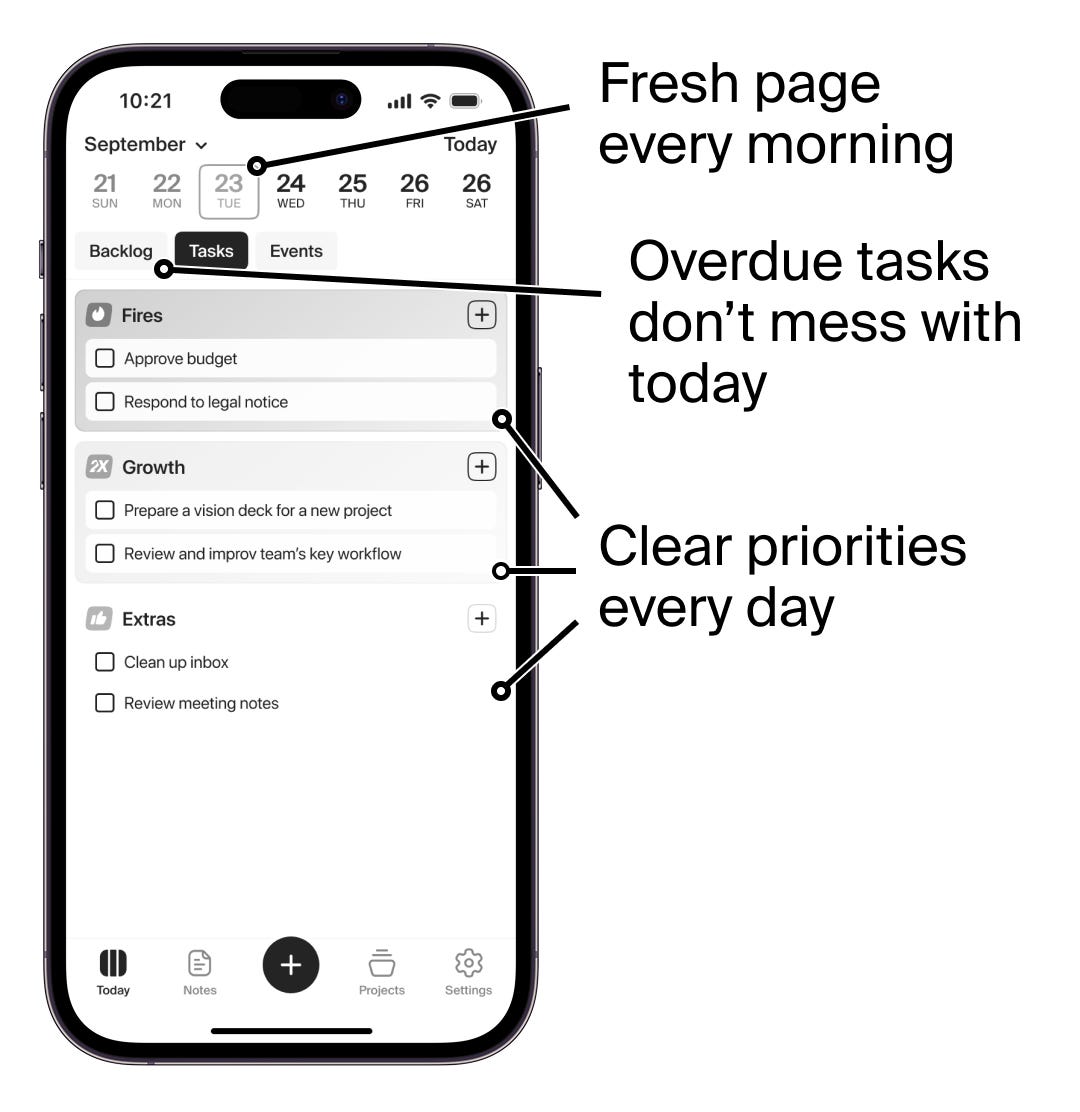
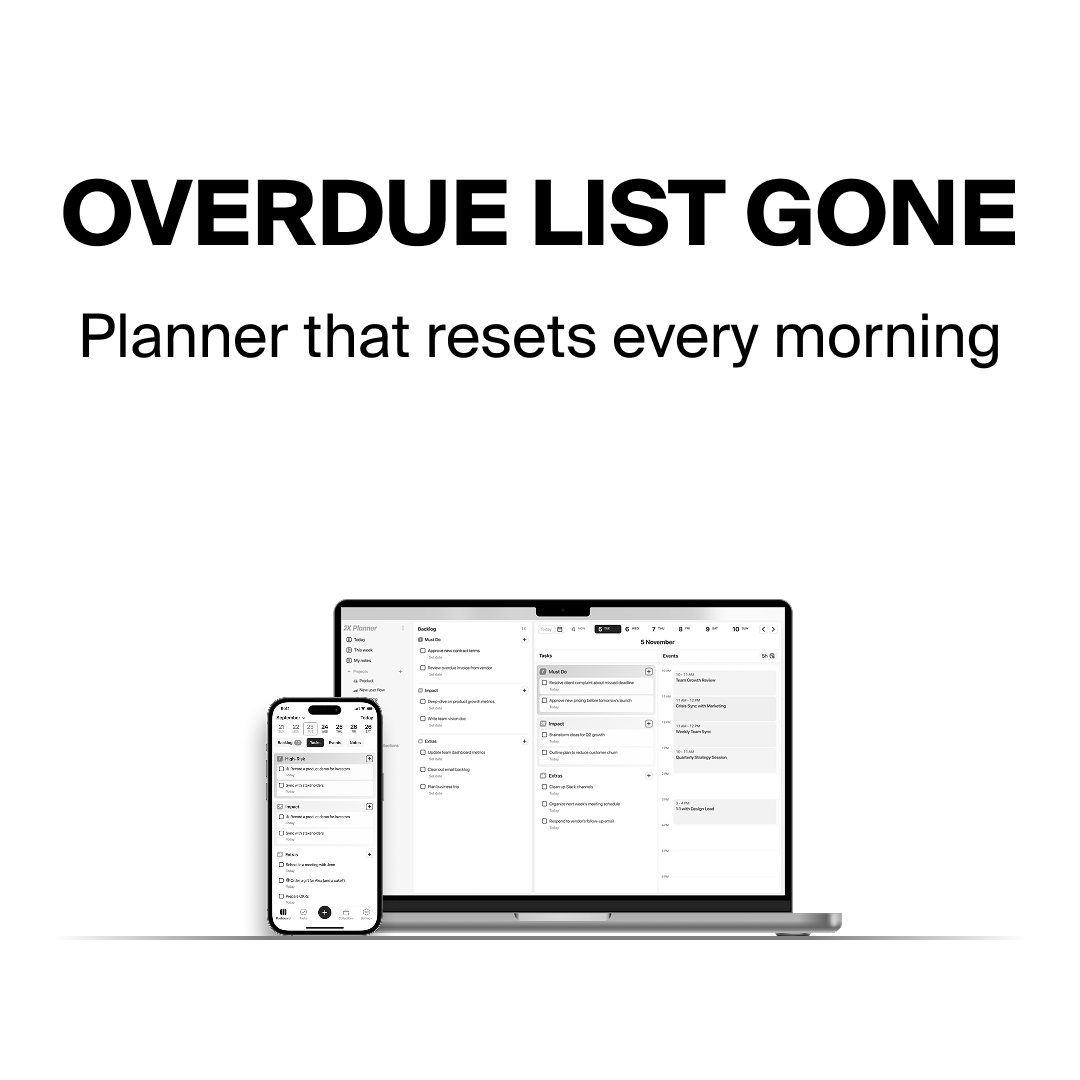
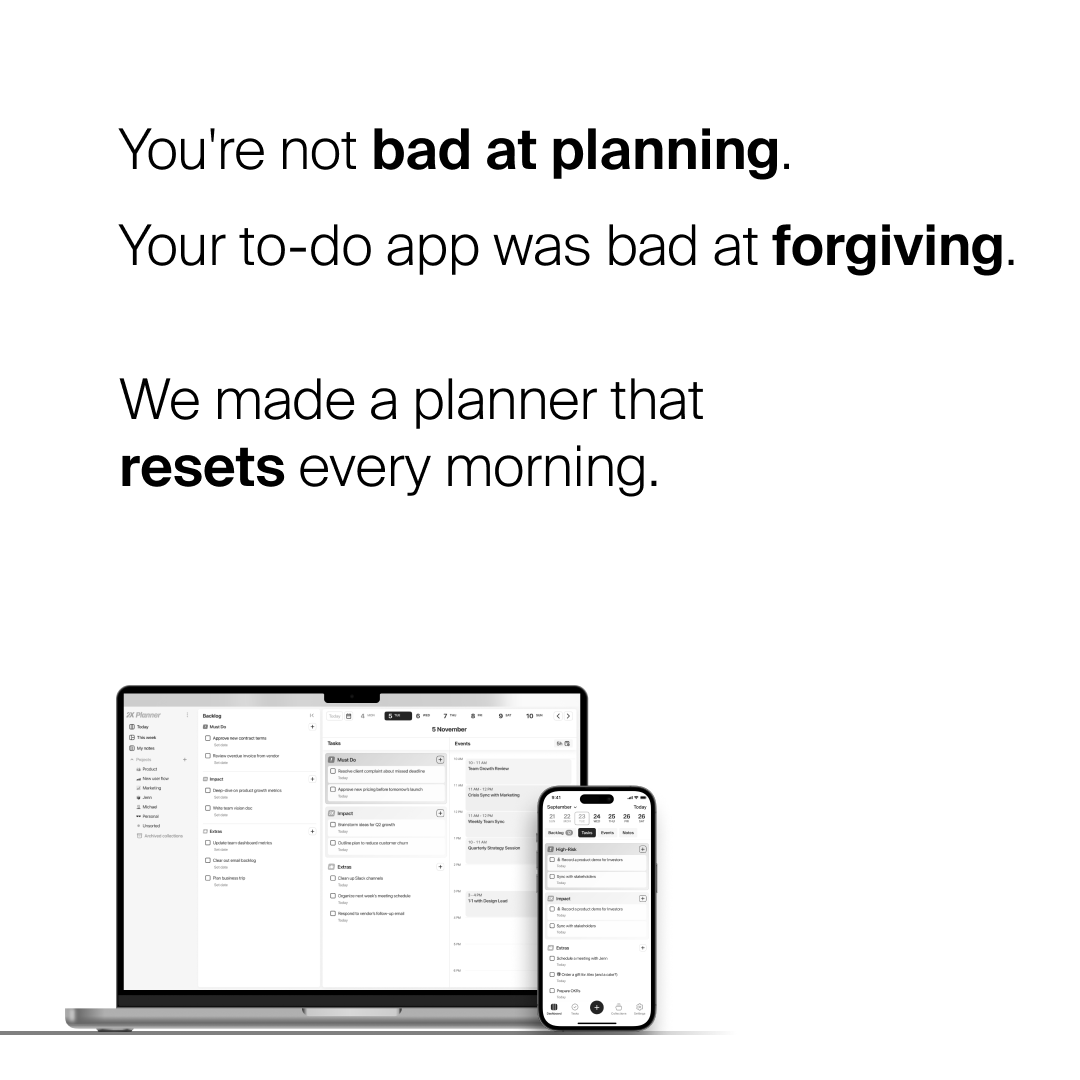
As you can see, all of them are rudimentary. A catchy title, simple screenshots and a lot of space in between.
The only problem with the statics-only approach: creatives die quickly. You can squeeze 30-50 purchases out of a single variation. 80 if you strike gold.
But once you find 3-4 winning templates, variations are truly endless.
If you found this useful, check out my previous article where I reverse-engineer Meta ads to find the right campaign structure.